

Lubna and Pebble by Wendy Medour
- Oct 10, 2025
- 3 min read
Updated: Nov 19, 2025
Author: Wendy Meddour
Illustrator: Daniel Edneus
Genre: Picture Story Book
Recommended Ages: 4-8
Illustrations:
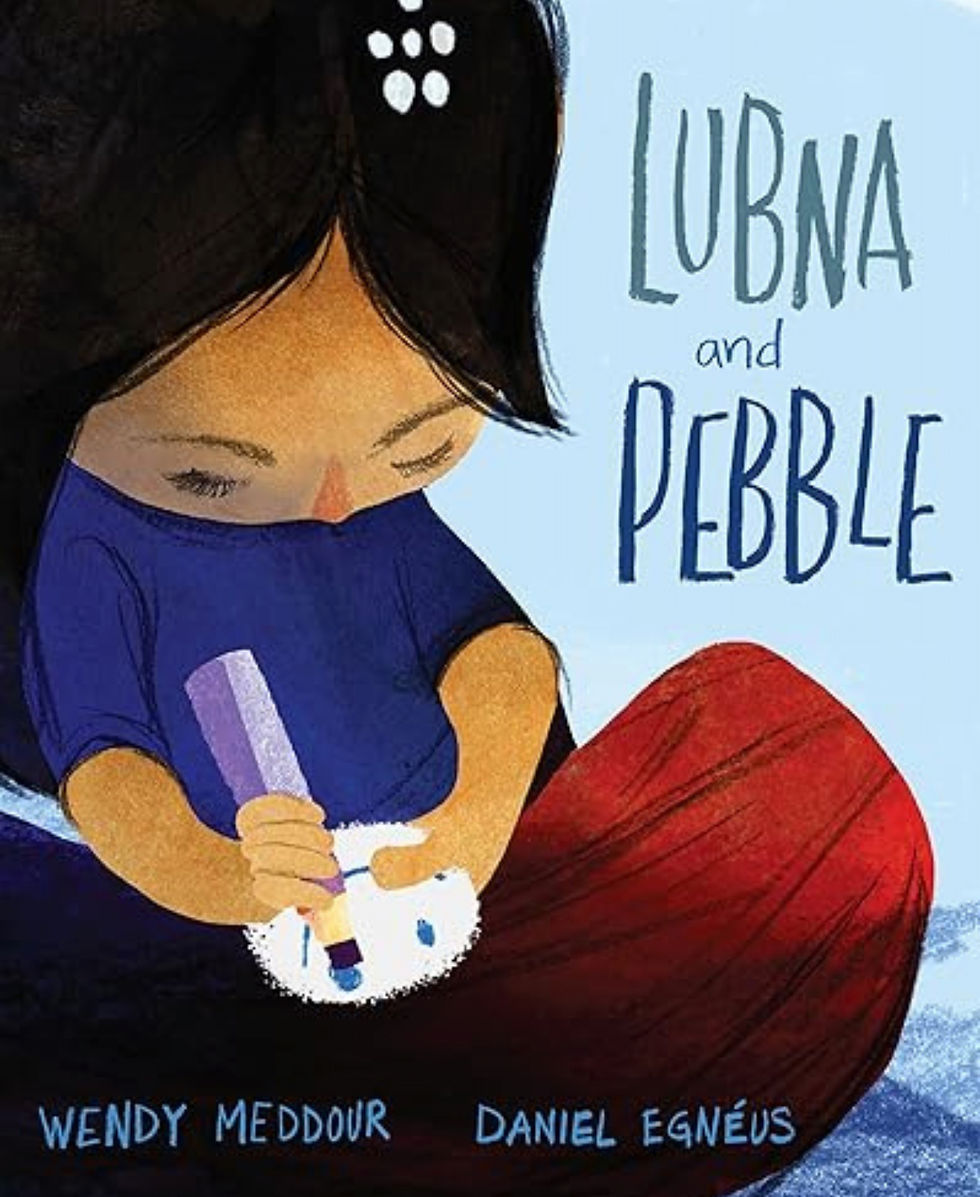
Daniel Egnéus’s illustrations in Lubna and Pebble are dreamlike, expressive, and full of emotion. He uses watercolor and mixed media with soft, muted tones of blue, gray, and brown to reflect the sadness and uncertainty of the refugee camp. Brighter colors appear when moments of warmth and friendship occur, symbolizing hope and human connection. The artwork beautifully balances realism and imagination, helping children feel the story’s emotions even if they can’t yet fully understand the refugee experience.
Summary:
Lubna and Pebble by Wendy Meddour, illustrated by Daniel Egnéus, is a gentle and heartfelt story about a young girl who finds comfort and friendship in an unexpected place during a time of uncertainty. Through simple but powerful language and emotional illustrations, the book explores how hope and kindness can shine even in difficult moments. It’s a moving reminder that love and connection can help us feel safe, no matter where we are.
My Thoughts:
Lubna and Pebble is a touching and beautifully illustrated story that stayed with me long after reading it. Lubna’s kindness and strength show how even a small act—like sharing her special pebble—can bring comfort and hope to someone else. The story is simple but deeply emotional, helping children understand what it means to be brave and compassionate when life feels uncertain. I especially loved how the illustrations use soft colors to show both sadness and warmth, reminding us that love and friendship can exist even in the hardest places. This book is a wonderful choice for classroom discussions about empathy, belonging, and finding light in dark times.
Classroom Integration:
1. Discussion and Reflection:
Feelings and Comfort: Begin with a class discussion about what makes students feel safe or comforted. Ask, “What helps you when you feel worried or alone?”
Empathy Talk: Guide students to think about how Lubna shows kindness. Discuss what kindness looks like in their own lives.
Global Awareness: Use a world map to gently introduce the idea that some families have to leave their homes and find new ones. Emphasize understanding, not fear.
2. Art Activity – “My Pebble Friend”:
Give each student a small smooth pebble (or a paper cutout if real ones aren’t available).
Ask them to decorate their pebble with markers or paint and name it—just like Lubna did.
Students can write a short sentence about what makes their pebble special or what it would say if it could talk.
3. Writing Activity – “A Gift of Kindness”:
Have students write or draw about a time they helped someone or shared something special.
Create a class “Kindness Wall” where everyone’s stories or drawings are displayed.
4. SEL (Social-Emotional Learning) Connection:
Use the book to introduce topics like empathy, resilience, and gratitude.
Do a circle-sharing activity where students share one kind thing someone did for them that made them feel happy or included.
5. Extension for Older Students (Grades 3–4):
Compare Lubna and Pebble to another picture book about kindness, such as Each Kindness by Jacqueline Woodson or The Day You Begin by Jacqueline Woodson.
Discuss what these stories teach about courage and belonging.
6. Library or Bulletin Board Idea:
Create a “Pebbles of Hope” display where students write short positive messages or wishes for the world on paper pebbles.
Why Lubna and Pebble is important for Diversity and Inclusion:
Lubna and Pebble is a powerful picture book that gently introduces young readers to themes of displacement, immigration, and emotional resilience. By centering Lubna—a young refugee child—this story offers an important and compassionate mirror for children who have experienced fear, loss, or uncertain transitions. It also provides a meaningful window for students who may never have encountered life inside a refugee camp, helping them understand the humanity behind global events.
The book highlights how children cope with trauma in different ways and shows the importance of friendship, empathy, and emotional safety. Through simple, tender illustrations and spare text, Lubna and Pebble allows children to consider big topics—war, migration, loneliness, and hope—in an age-appropriate way.
Stories like this broaden students’ understanding of the world and reinforce that every child’s experience deserves compassion, respect, and a place on our library shelves.


Comments